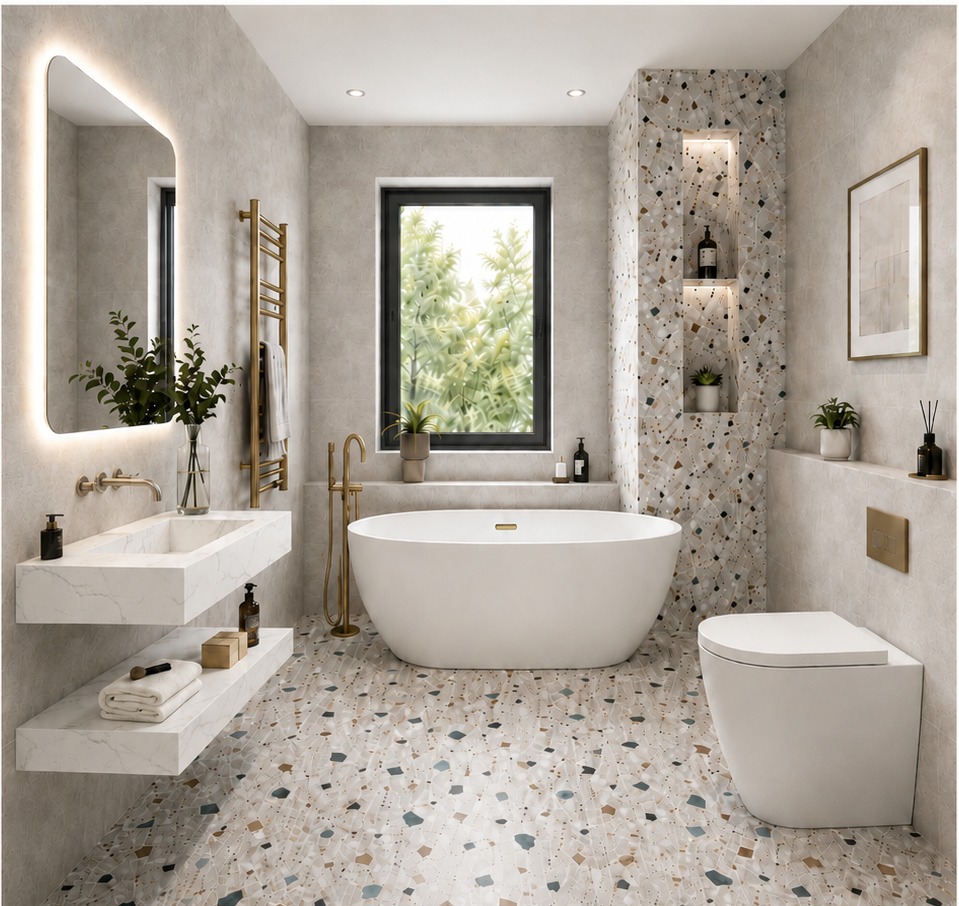
Other bathroom services

Downstairs Toilets & Smaller Bathroom Upgrades

Practical cloakrooms, compact WCs, macerator toilets and focused bathroom improvements.

Not every project needs a full bathroom renovation. Sometimes the best improvement is a well-planned downstairs toilet, a new basin, a replacement bath, a better shower screen or a smarter upgrade to what you already have.

Main service

A downstairs toilet can make the whole home work better

A downstairs toilet, cloakroom or compact WC can be one of the most useful upgrades in a home. It can make daily life easier, reduce pressure on the main bathroom and give guests a convenient toilet without going upstairs.

It is especially useful for busy family homes, homes with visitors, people who struggle with stairs, landlords improving tenant convenience, and properties where the only bathroom is upstairs.

The key is planning it properly. A small room still needs sensible drainage, ventilation, water supply, door position, basin choice and access for future maintenance.

Extra convenience

An extra WC downstairs can make the home more practical for everyday use.

Easier access

Useful for guests, children, older relatives or anyone who finds stairs inconvenient.

Better home appeal

Extra bathroom facilities can make a property feel more complete and easier to live in.

Small-space planning

Cloakrooms need careful choices around basins, doors, toilets, boxing and finishes.

Compact WC

Can it be done?

Many homes have space for a downstairs toilet — but the route matters

A downstairs toilet can often be created under the stairs, in a hallway cupboard, utility area, rear lobby, part of a larger hallway, or within an existing ground-floor room. The main question is not only whether the toilet fits — it is whether the services can be connected properly.

Is there enough usable space for a toilet and hand basin?
Can the toilet connect to a soil pipe or suitable drain?
Can the basin waste run with a proper fall?
Can the room be ventilated properly to outside?
Will the door position, privacy and access work day to day?
Would a macerator make the location possible if gravity drainage is difficult?

Practical rules

Small room, important details

A downstairs toilet may be compact, but it still needs proper thinking around drainage, ventilation, water supply, electrics and future maintenance.

Planning position

Internal downstairs toilets often do not need planning permission, but listed buildings, extensions and wider alterations may need additional checks.

Drainage route

The toilet and basin need a sensible route to waste drainage. The pipe route often decides the best location.

Ventilation

A WC needs ventilation to help control odours and moisture. The fan or ventilation route should be planned properly.

Hand washing

A compact basin, corner basin or small vanity can make even a tight WC feel more finished and usable.

Macerator toilets

When normal drainage is difficult, a macerator can open up options

A macerator toilet can be a useful option where a standard gravity soil pipe route is difficult. It breaks down waste and pumps it through smaller pipework to a suitable drain or soil connection.

It is not always the first choice. If a normal gravity waste connection is practical, that is usually simpler. But in the right property, a macerator can make a downstairs toilet possible where the layout would otherwise be difficult.

Useful for awkward locations

Can help where the toilet is too far from the main soil pipe or below a suitable drain level.

Needs proper access

A macerator should be accessible for servicing, maintenance and future replacement.

Correct use matters

Only toilet paper and normal waste should be flushed. Wipes and unsuitable items can cause blockages.

Not for every job

We look at the property first and advise whether gravity drainage or a macerator is the better route.

Macerator option

A useful solution when specified properly

The decision should be based on the drainage route, access, noise consideration, electrical supply and how the toilet will be used.

Possible locations

Where can a downstairs toilet go?

The best location is usually the one that gives enough usable space while keeping drainage, water supply and ventilation sensible.

Under the stairs

A popular option where head height, door position and pipe routes allow a compact WC and basin layout.

Hallway cupboard

A storage cupboard can sometimes be converted if there is enough width, ventilation and a sensible waste route.

Utility room

Utility rooms can work well because water and waste services may already be nearby.

Part of a hallway

A larger hallway or lobby may allow a small cloakroom to be formed with partitioning and a new door.

Rear addition or side area

Some properties have ground-floor side or rear spaces that can be better used as a practical WC.

As part of other works

A downstairs toilet can also be planned as part of a wider renovation, utility upgrade or layout change.

Value and convenience

Extra bathroom facilities can improve how a home feels

A downstairs toilet is not always the same as adding a full bathroom, but it can make a property feel more practical, convenient and complete.

6%

Additional bathroom guidance

Market research has reported that an additional bathroom can add around 6% to the value of the average house.

1

Extra WC downstairs

Even a compact cloakroom can make the ground floor more convenient for daily use and guests.

+

Better buyer appeal

Practical improvements can help a property feel easier to live in, especially where the main bathroom is upstairs.

Value depends on property type, layout, location, finish, market conditions and whether the new WC improves the home without harming the existing space. These figures are general guidance only and are not a valuation guarantee.

How it works

From idea to finished cloakroom

A downstairs toilet starts with understanding where it can go and how the services can be connected.

1

Initial enquiry

Tell us where you are thinking of adding the toilet and whether there are nearby drains, water supply or existing services.

2

Office consultation or site visit

We can discuss ideas, product choices and budget at the office, or inspect the property where the route needs checking.

3

Drainage and ventilation check

We look at whether a normal gravity waste route is possible, or whether a macerator may be worth considering.

4

Layout and product choice

We choose a toilet, basin, door position, ventilation route and finish that suit the size of the room.

5

Clear quotation

You receive a written quotation setting out the intended works, products, inclusions, exclusions and next steps.

6

Installation

Pipework, ventilation, boxing, sanitaryware, tiling or wall finishes and final fittings are installed in the right order.

7

Final checks and handover

We check operation, seals, ventilation, access panels, finish and leave the space ready to use.

Designed around the space

A downstairs toilet does not need to be large to feel well designed. The right basin, toilet, lighting, mirror and finishes can make a compact cloakroom feel smart and considered.

Smaller bathroom upgrades

Focused improvements without a full renovation

We also help with smaller bathroom jobs where you do not need a full rip-out, but still want the work planned and finished properly.

Replacement bath

Remove an old bath and replace it with a new bath, panel, taps, waste and sealing where suitable.

New basin or vanity

Upgrade a tired basin to a smarter vanity unit with better storage, tap and waste.

New toilet

Replace an old WC with a new close-coupled, back-to-wall or compact toilet where the pipework allows.

Shower screen or valve

Replace a tired bath screen, shower screen or shower valve to improve use and appearance.

Taps and wastes

Change old taps, wastes and fittings for cleaner, more modern replacements.

Towel rails

Replace or upgrade a bathroom radiator or heated towel rail where pipework and heating setup allow.

Extractor fans

Improve ventilation with a replacement extractor fan or better fan option where the route is suitable.

Finishing improvements

Silicone, bath panels, mirrors, cabinets, accessories and small finishing details that improve the room.

Smaller works are subject to availability and suitability. Some jobs may be better handled as part of a larger bathroom renovation if existing pipework, tiling or hidden defects make a simple replacement impractical.

Office consultations

Come in and talk through the idea before committing

You can visit our Fulham consultation office by appointment to discuss a downstairs toilet, cloakroom, macerator option or smaller bathroom improvement.

We can look through compact toilets, basins, vanity units, wall finishes, tiles, taps and practical options, then talk honestly about what is realistic for the space and budget.

Discuss where a downstairs toilet could go
Compare standard drainage and macerator options
Look through compact basins, toilets, tiles and finishes
Work out whether it is a small job or part of a bigger renovation
Book a Consultation

Questions

Downstairs toilet FAQs

Do I need planning permission for a downstairs toilet?

In many cases, an internal downstairs toilet does not need planning permission if it is created inside the existing property. However, listed buildings, extensions and wider alterations may need additional checks.

Does a downstairs toilet need building regulations?

Drainage, ventilation, water supply, electrics and structural changes may all bring building regulations into consideration. The exact requirement depends on the property and the work being carried out.

Can a toilet go under the stairs?

Sometimes, yes. It depends on head height, width, door position, drainage, ventilation and whether there is space for a toilet and hand basin.

What if there is no soil pipe nearby?

If a normal gravity connection is difficult, a macerator may be considered. It is not the answer for every property, but it can make certain downstairs toilet locations possible.

Will a macerator smell or be noisy?

A correctly specified and installed macerator should not smell when used properly and maintained. It will make some noise when operating, so location, access and product choice should be considered before deciding.

Does a downstairs toilet need a window?

A window is not always necessary, but the room still needs suitable ventilation. In many compact WCs, a properly routed extractor fan is the practical solution.

Do you only do full renovations?

No. We also help with smaller bathroom improvements such as replacement toilets, basins, baths, shower screens, taps, extractor fans and finishing upgrades, subject to availability and suitability.

Start your project

Tell us what you need

Tell us whether you are thinking about a downstairs toilet, macerator toilet, compact cloakroom or a smaller bathroom upgrade. You can also call us directly on 0207 371 3333.

This form is for initial enquiries only. A proper quotation can only be given after discussing the project and, where needed, viewing the property.

0207 371 3333