Space
Head height & clearances
Under stairs in particular, the usable standing area matters more than the floor outline. We check whether the WC, basin and doorway can be used comfortably.
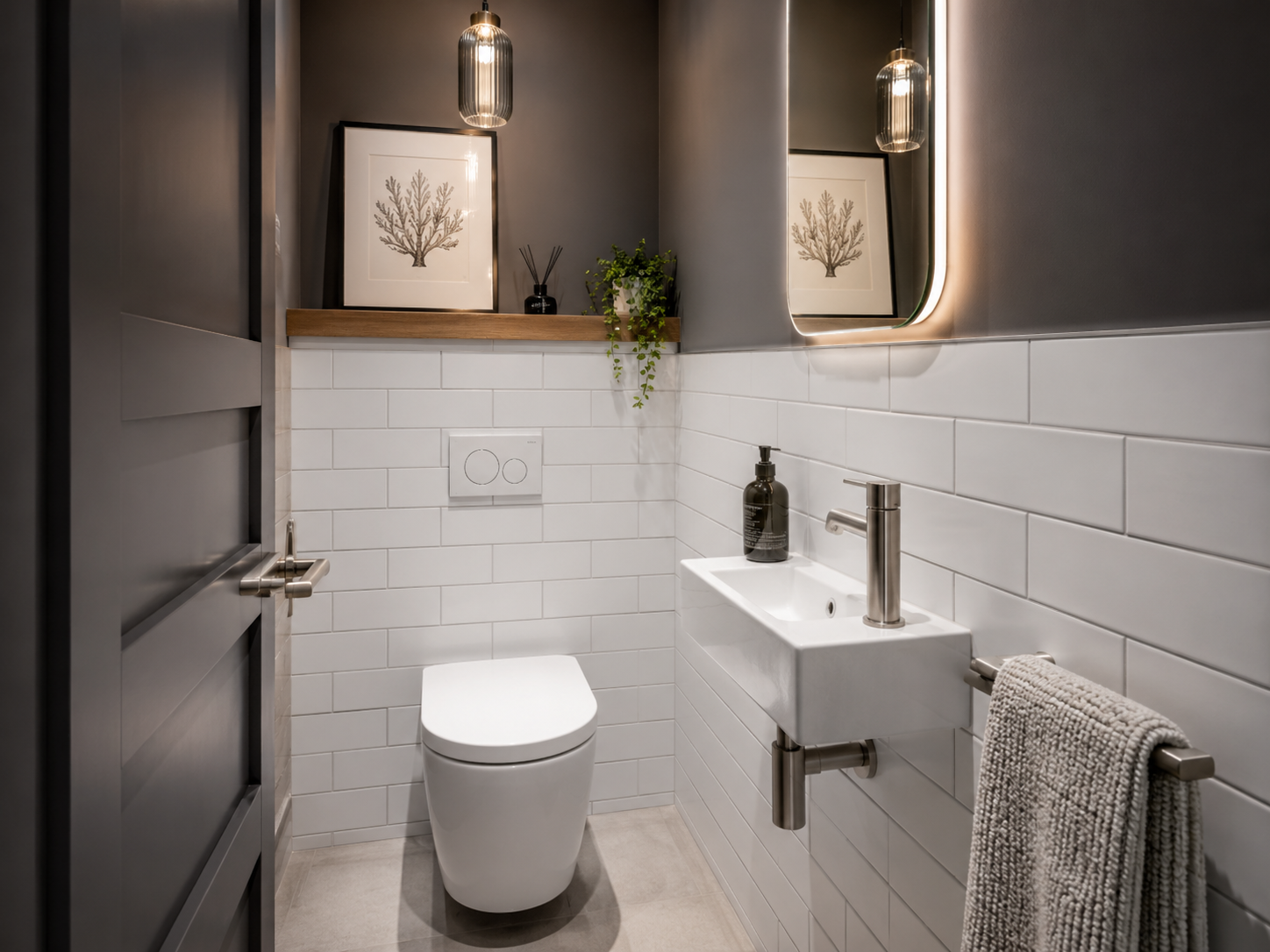
We plan and install new cloakrooms in suitable under-stairs, hallway, utility and extension spaces, starting with the drainage, ventilation and usable room rather than squeezing fittings into a drawing.
More than a toilet and basin
When a downstairs WC is being added where there was no room before, the job can include much more than fitting sanitaryware. The position of the soil pipe, waste route, door, ventilation and surrounding walls can decide whether the idea is practical.
First survey checks
A small footprint is not automatically a problem. Poor access or an unrealistic drainage route usually matters more.
Under stairs in particular, the usable standing area matters more than the floor outline. We check whether the WC, basin and doorway can be used comfortably.
We identify the nearest practical discharge route and whether the floor or surrounding construction allows the pipework to be installed sensibly.
A new room should not block a hallway or create an awkward doorway. The door position and swing can be as important as the sanitaryware.
Internal cloakrooms normally need a planned ventilation route. We look at how that can be achieved before the room is enclosed.
Water supply, lighting, any fan provision and heating are planned so the finished room is practical to use and maintain.
Leasehold, listed or managed properties can have additional requirements. We can flag practical issues that may need checking before work proceeds.
Common cloakroom projects
A popular use of otherwise awkward space when there is enough headroom, a workable doorway and a sensible route for the WC connection.
Form a compact room off a hallway where circulation can be preserved and the new enclosure does not make the entrance feel cramped.
Existing water and drainage nearby can sometimes make a utility area a practical place for an additional WC and basin.
Where space has already been created, a well-positioned cloakroom can add convenience without taking over the main living area.
Drainage matters
A tiny room can still become an expensive problem if the WC is placed somewhere that cannot be drained sensibly. We deal with the route before committing to the layout.
Where practical, a conventional gravity connection to suitable drainage is the simplest and most robust route.
In some properties a pumped WC or macerator-type solution may be considered when gravity drainage is impractical. Suitability depends on the room, route and expected use.
Whichever system is used, the installation should allow sensible access to important components rather than burying everything permanently behind finishes.
Small room, careful choices
A basin that is 100 mm too deep or a WC with the wrong projection can make a usable room feel impossible. We check the actual footprint rather than choosing by appearance alone.
How the work is built
Measure the proposed room and inspect the nearest practical drainage, water and ventilation routes.
Set the WC, basin, door and finishes around actual clearances and the service route.
Build or alter walls and the doorway where required and prepare access for the services.
Install the agreed drainage, water, ventilation and electrical provisions before closing the walls and floor.
Complete the agreed wall and floor finishes, fit the sanitaryware, lighting and accessories, and make good the surrounding area.
Test the room and complete final seals and finishing details before handover.
Pricing
An existing WC being refreshed and a brand-new room formed under the stairs are completely different projects. The expensive part is often the drainage and building work, not the toilet itself.
The quotation is based on what the space actually needs: walls, door, drainage route, water, ventilation, electrical work, floor and wall finishes, sanitaryware and making good.
See our general price guide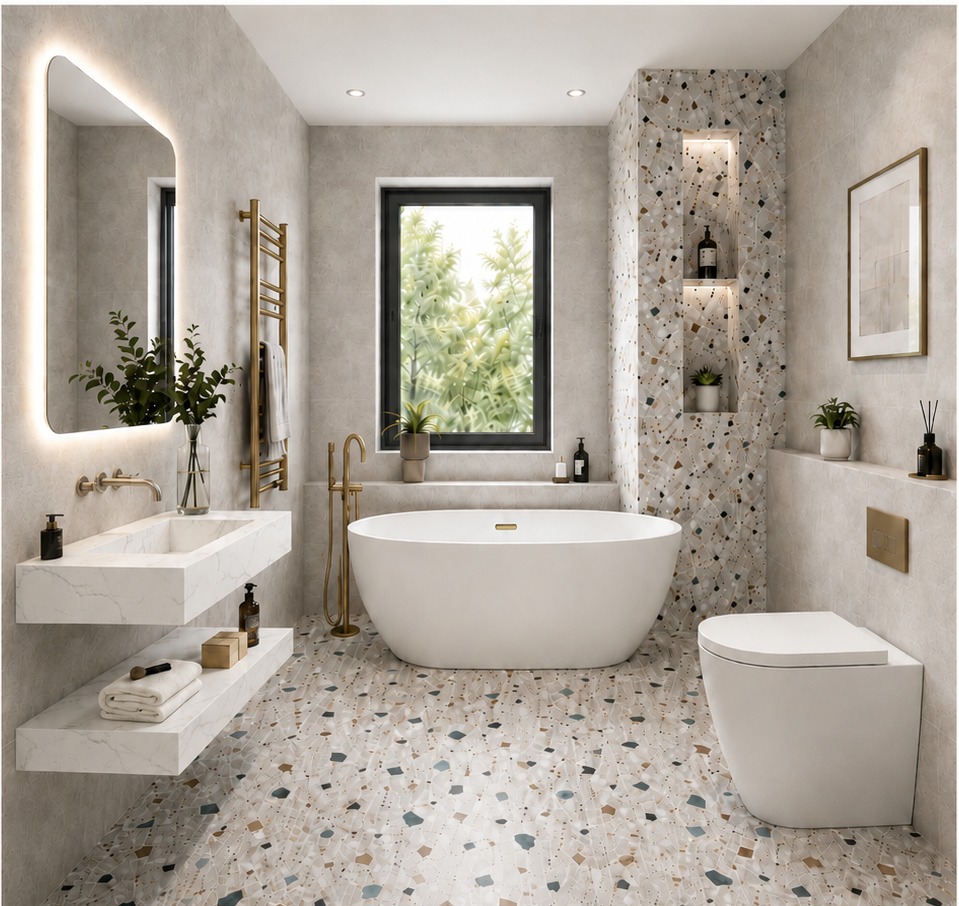
Cloakroom questions
Sometimes. We need enough usable space and practical routes for drainage, water and ventilation. We also check that the new enclosure and doorway do not damage circulation through the property.
It can in suitable properties. Head height, WC projection, basin size, door access, drainage and maintenance space all need to be checked before the layout is fixed.
Where a normal gravity route is practical, that is usually preferable. In some situations a pumped or macerator-type solution can be considered after the property, route and expected use have been assessed.
Many internal projects do not require a normal planning application, but property-specific restrictions and other approvals can still apply. Leasehold, listed or structurally altered properties should be checked before work proceeds.
We do not use one fixed online price because the scope varies dramatically. A new room can involve drainage, walls, a door, water, ventilation, electrics, finishes and sanitaryware. We survey and quote the actual project.
Yes. We can work with products you like, but compact rooms are unforgiving, so dimensions and service requirements should be checked before anything is ordered.
Send the postcode and photographs showing the proposed area and the surrounding hallway or room. If it looks workable, we can arrange a free survey and assess the drainage and layout properly.